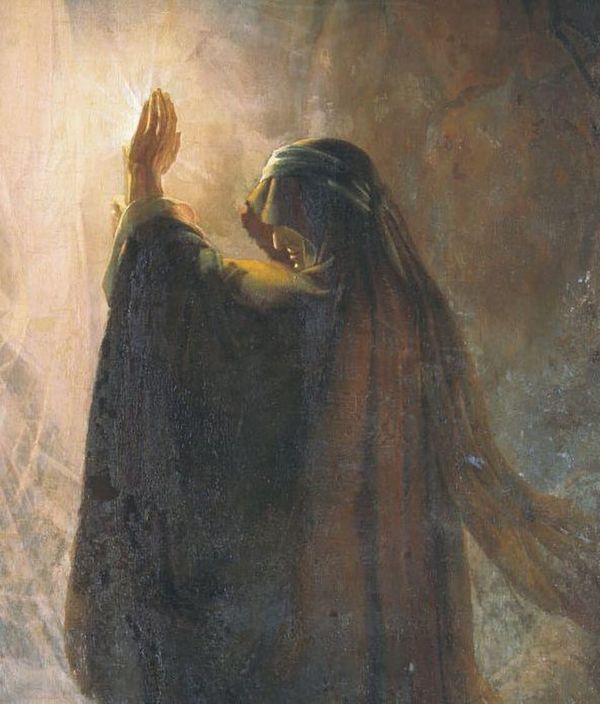
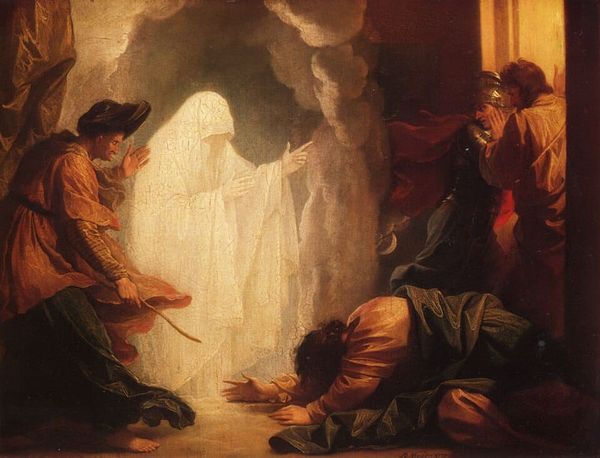
Was the Witch of Endor really a 'witch'?
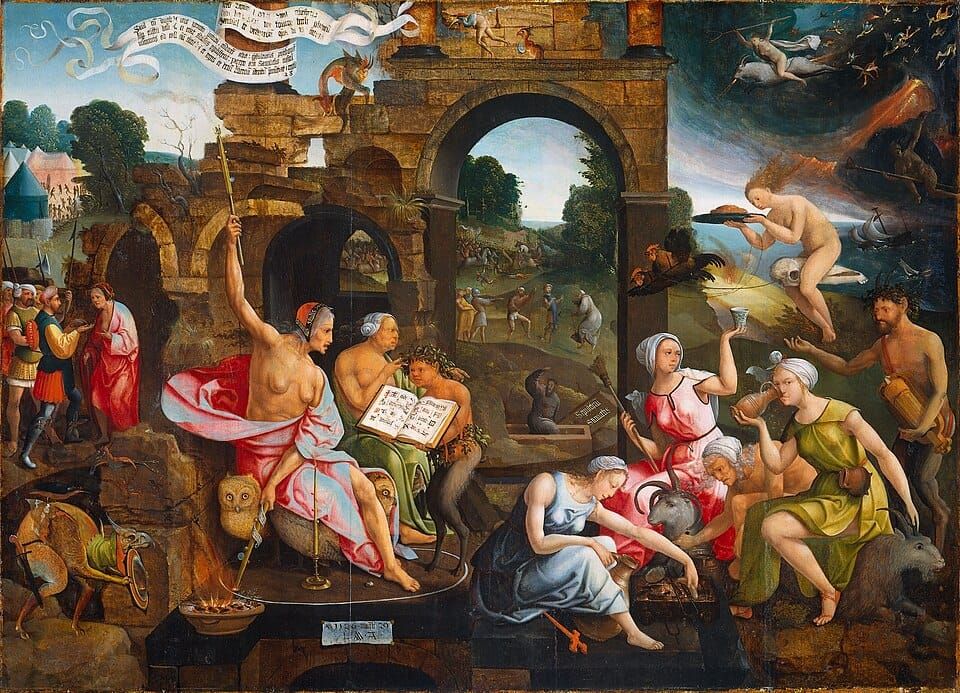
Or: Did ghosts have "wives"? A special post-Halloween investigation.
In this second post of a series on the 'Witch of Endor' in 1 Samuel (see the first post here), I examine how the use of "witch" for the woman in some English Bibles isn't quite correct. A better translation might be something like "diviner of ghosts" or even "ghost wife." These corrected translations demonstrate that the presence of ghosts in the ancient Mediterranean shaped the cultures of biblical writers and readers in important ways.
Chances are you've been seeing lots of witches lately.
Halloween was just this past weekend, and as is customary on the last day of October, my neighborhood's streets were filled with superheroes, princesses, ghosts, and, yes, witches.
You know the outfit already: pointy hat, broom, black clothing, perhaps a long nose or cauldron for good measure. We know what a witch is supposed to look like, and we all have a general idea of what they are: (mostly female) magicians who bend the laws of nature to suit their (usually wicked) ends.
And according to some English translations of the Bible, we can trace the presence of witches all the way back to ancient Israel, to the famous story of the 'Witch of Endor.'
The King James (or 'Authorized') Version (1611), for example, identifies the woman at Endor as a "witch" in its chapter heading (though translates her title as "a woman that hath a familiar spirit" in the passage itself). Similarly the Geneva Bible (1560) labeled the woman of Endor a "witche."
This translation practice has made its way into modern English Bibles, as well. The Message translation identifies the woman as "a witch of Endor," while the New English Translation (NET) also deccribes her this way in its chapter heading for 1 Samuel 28.
Do these descriptions get it right?
Not so much: while the woman at Endor does perhaps bend the laws of nature (ghosts visiting the living isn't an everyday occurrence, after all), she doesn't seem to use these powers for harm: she summons the ghost of Samuel, as requested, but seems hesitant or fearful to engage in this activity. At no point does the woman seem interested in harming Saul or his companions.
In fact, she does the opposite: after Samuel's ghost has been summoned, she makes a meal for Saul. This is likely because Saul has come to her at sunrise (a popular time for summoning ghosts) and has not eaten. Saul, having just learned of his own doom, is exhausted: "Immediately Saul fell full length on the ground filled with fear...and there was no strength in him, for he had eaten nothing all day and all night" (28:20). The woman feels pity for Saul: "when she saw that he was terrified, she said to him, "...let me set a morsel of bread before you. Eat, that you may have strength when you go on your way" (28:21-22).
Saul initially refuses this offer, but relents when the woman (and Saul's attendants) insist. The woman then slaughtered a fatted calf, kneaded unleavened cakes, and fed Saul and his servants.
Far from seeking to harm Saul, this woman performs what was in antiquity the expectation of a good host: she fed her guest and aided them in their travels. No cauldrons or broomsticks in sight.
So, the woman of Endor doesn't really seem to fit with our standard view of witches. And as it turns out, there are better translations for the term we often encounter as "witch."
The woman at Endor is referred as an ov, a Hebrew term indicating skill in some kind of ritual practice. This term is also used in Leviticus, where such people are condemned (19:31; more on that in a later post). Based on the narrative of 1 Samuel as well as other clues in the Hebrew Bible, scholars generally believe that the term referred to those who communicated with the spirits of the dead, or "ghosts." This is where you get the KJV translation of "one with familiar spirits" or the NRSVUE's "medium."
But I ultimately prefer Robert Alter's translation: "ghostwife."
As noted by Alter, the term here used for the woman (ov) is linked by name with the kinds of spirits (ovot) that she was able to call up and which Saul had earlier "cast out" from the land (see 1 Sam 28:3). When translated as "medium," we might lose sight of exactly what this woman was skilled in "mediating": she specialized in calling up the dead.
But why does all of this matter?
First, it reminds us that we read the Bible through our own kinds of "mediums": translators. Encountering the bible in its ancient languages, we rely on the work of others (or ourselves) to help make sense of languages that are not native to us.
And, as the old Italian proverb has it, traduttore, traditore: translators are traitors.
All translations, even those that aim for faithfulness or stem from scholarly study, make compromises, obscure some meanings while featuring others, and inevitably stray (at least partially) from the intent or functions of the original language.
Second, the common mistranslation of "witch" matters because it turns the problems of harmful 'magic' and 'witches' into supposed age-old issues, ones that stretch back even into the ancient world. And it positions the modern people that opposed (alleged) witches as those merely following the dictates of the Bible.
This obscures the real history: 'witch' is a term much more at home in our modern contexts, shaped by medieval and early modern ideas about harmful magical practices and the people who (allegedly) performed them.
So, was the women at Endor really a witch? I don't think so.
But this shouldn't obscure what else is going on in the story: ghosts could come back among the living, and there were some in biblical times that were particularly adept at summoning them. In my next post, I'll start exploring why exactly the biblical writers seem so 'haunted' by this possibility.
Thank you for reading The Haunted Bible. Would you like to receive posts as soon they're published? Subscribe here. And check out more of my work at my personal website.
Translation credits: Translations of the Hebrew Bible (Old Testament) are from the New Revised Standard Version, Updated Edition (NRSVUE), unless otherwise noted. Robert Alter translation and notes are from Alter, The Hebrew Bible: A Translation with Commentary, Vol 2: Prophets (Norton, 2015).